Gate Automation
SWING AND SLIDING GATES
Electric Gate Automation Systems
Whether you are installing new gates or automating existing driveway gates, understanding the different types of electric gate operators can help you choose the right solution for your property. This guide explains the main options available and what to consider when getting quotes from professional installers.
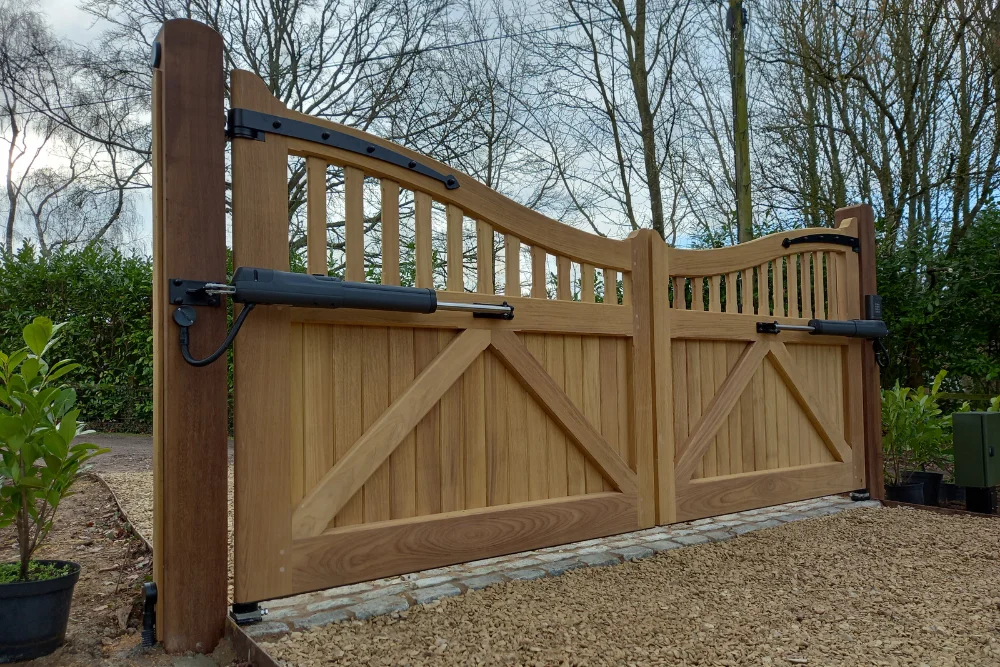
New gates must be installed and hinged to suit the required mounting dimensions for post-mounted electric gate operators. A range of post-mounted gate actuators are available to suit different gate sizes and required duty cycles. Small gates (up to 2000mm per leaf) hung on small section posts can be automated with short-stroke, self-locking operators. Larger gates with big posts tend to use long-stroke post-mounted operators and may require the addition of an electronic lock to secure the gates in the closed position.
With a choice of electro-mechanical gate operators (by far the most popular choice for residential electric driveway gates) or hydraulic gate operators, your specialist gate installer will be able to advise on the most suitable post-mounted operators for your specific requirements.
GATE OPERATORS FOR ELECTRIC SLIDING GATES
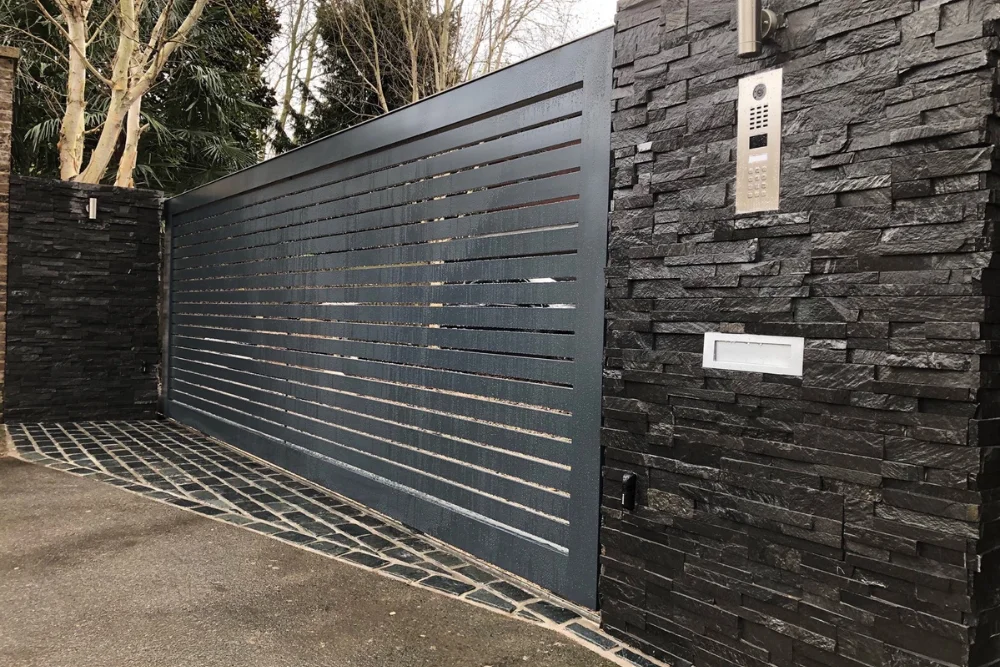
A sliding gate is often a good choice where space on a driveway is restricted or the angle at which vehicles approach is difficult. Sliding gate operators tend to encompass the electric motor and transmission (drive system) with an on-board control panel all housed within the same motor casing. Sliding gate motors sit behind the gate to one side of the entrance and drive the gate via a toothed rack fitted to the rear of the gate panel. The motor has a more straightforward mechanical task than a swing gate motor as it only drives a fixed load backwards and forwards in a straight line.
The correct operator for your sliding gate will depend upon the size and weight of the gate panel, and how many operations per day/hour it is required to perform. Several different models are available to suit all applications and your specialist electric gate fitter will ensure a suitable sliding gate motor is selected.
Tracked sliding gates will need to be on a level driveway across the entrance width, it is not recommended for safety and mechanical reasons to slide a gate up or downhill. Cantilever sliding gates can be installed on driveways with slight slopes but the gate itself remains level with level foundations that the carriage system is installed on to one side of the entrance/exit.
UNDERGROUND SWING GATE OPERATORS
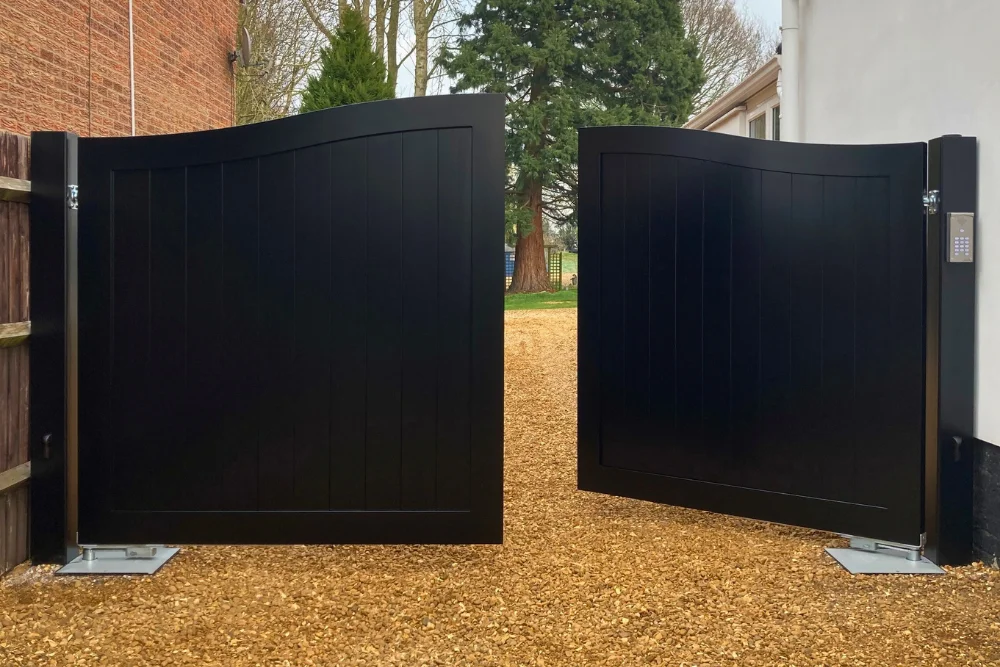
The aesthetic appeal of hiding the electric gate motor below ground makes this type of operator a popular choice for both metal and wooden gates.
Underground gate operators are housed in a steel casing set beneath the gate hinge. The operator drive shaft must align with the hinge so that it rotates through the same axis to open and close the gate. Failure to accurately achieve alignment will reduce the life of any gate operator, so it is important that a competent gate automation installer fits the underground operator accurately.
An experienced electric gate installer will be able to fabricate a steel drive shoe, or riser to suit the gate frame to which the underground motor will fit.
Set in concrete below ground level, the motor and casing are subject to the elements. The area around the underground motor casing should be well drained and a soak away may be required beneath the casing during installation. If an underground gate motor is submerged in water for extended periods, the life of the motor will be shortened. Gate servicing and maintenance should keep your system clean, and dry and ensure long service from your investment.
Your specialist gate automation engineer will propose a suitable servicing and maintenance schedule to look after your electric gate system throughout and beyond the warranty period.